
ECONOMY — June 26, 2026
UN Report: Afghanistan Opium Production Drops 95 Percent After Taliban Ban
Existing stocks are projected to last until the end of 2026 while heroin prices have nearly doubled and purity has fallen in key markets, potentially pushing traffickers toward synthetic opioids.
The Ehtebar Desk — originates with Amu TV — corroborated by Ariana News, ToloNews and Afghanistan International — 2 min read
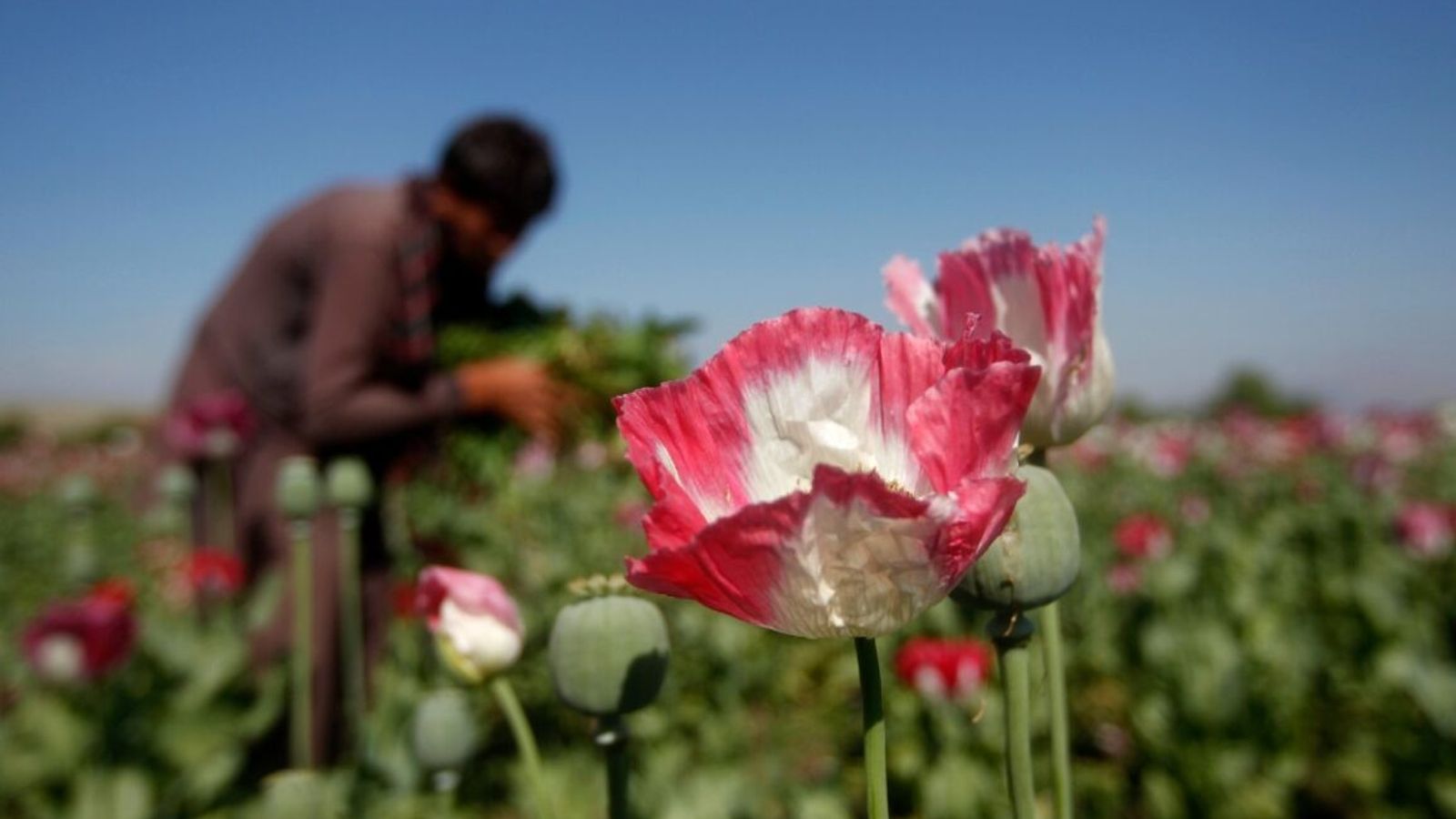
The UN Office on Drugs and Crime World Drug Report 2026 states that Afghanistan's opium production fell 95 percent after the Taliban imposed a ban on poppy cultivation. Cultivation area dropped from 232,000 hectares in 2022 to 10,200 hectares in 2025, cutting output from 6,200 tons to 296 tons.
Existing opium stocks are projected to sustain global markets until the end of 2026. No other country has replaced Afghanistan's previous production scale. Myanmar increased output to more than 1,000 tons because of internal conflicts rather than to fill the Afghan shortfall.
Heroin prices in major destination markets have nearly doubled from around 250 to 500 dollars per gram while purity has declined. The supply reduction may encourage traffickers to shift toward synthetic opioids such as fentanyl and nitazenes.
Methamphetamine production inside Afghanistan has remained stable or increased despite the opium ban. Domestic consumption patterns show more people seeking treatment for opioids and sedatives alongside rising methamphetamine use.
Read the original reporting at Amu TV →
Reliability assessment
Four independent outlets corroborate the core claim that the UNODC World Drug Report states Afghanistan's opium production fell 95% after the Taliban ban, with matching figures on cultivation area and output. This meets the threshold for reliable as multiple sources confirm the reported UN data.
The source language reads straight.
Independent web corroboration
An independent web search turned up no separate corroborating reports. Treat the account as single-sourced until more outlets pick it up.
Across the newsrooms
Where reports agree
- 95% drop in Afghan opium production and cultivation areas between 2022-2025 with specific hectare and ton figures matching across reports
- UN estimate that pre-ban opium stocks will sustain markets until end of 2026
- Heroin price increase and purity decline in destination markets
- Myanmar now largest producer but increase unrelated to replacing Afghanistan
- Risk of shift to synthetic opioids due to heroin supply shock
Filed by 4 outlets
Amu TV
Originating
Reported straight
Reported straight
Ariana News
Reported straight
Reported straight
ToloNews
Reported straight
Reported straight
Afghanistan International
Reported straight
Reported straight
Filed under
Economy — Opium Production, Taliban Ban, UNODC World Drug Report, Synthetic Opioids, Afghanistan Drug Economy
Reader supported
Keep Ehtebar running
Every published story uses paid tools to translate reporting, compare sources, extract claims, and produce a clearer read on Afghanistan. Reader support helps keep that work independent.
€5
helps cover daily verification runs
€15
supports a week of source comparison
€50
keeps independent analysis moving
More in Economy

Economic Commission Approves 37 Domestic Standards and 12 Testing Methods
— Reliable

Taliban Governor Says Around 700 Mines Under Extraction in Panjshir
— Reliable

Daily Production at Baghlan's Ghori Cement Factory Increases to 700 Tons
— Reliable

Two Irrigation and Flood-Prevention Projects Completed in Zabul
— Reliable