INTERNATIONAL — April 13, 2026
US and Iran Agree to Two-Week Ceasefire with Pakistan as Diplomatic Courier
The United States and Iran agreed to a two-week ceasefire on April 8, with Pakistan acting as a diplomatic courier to relay a 15-point US proposal and Iran's five-point counterproposal. Pakistani leaders received international congratulations, following coordination with China and a regional meeting.
The Ehtebar Desk — originates with Khaama Press — 2 min read
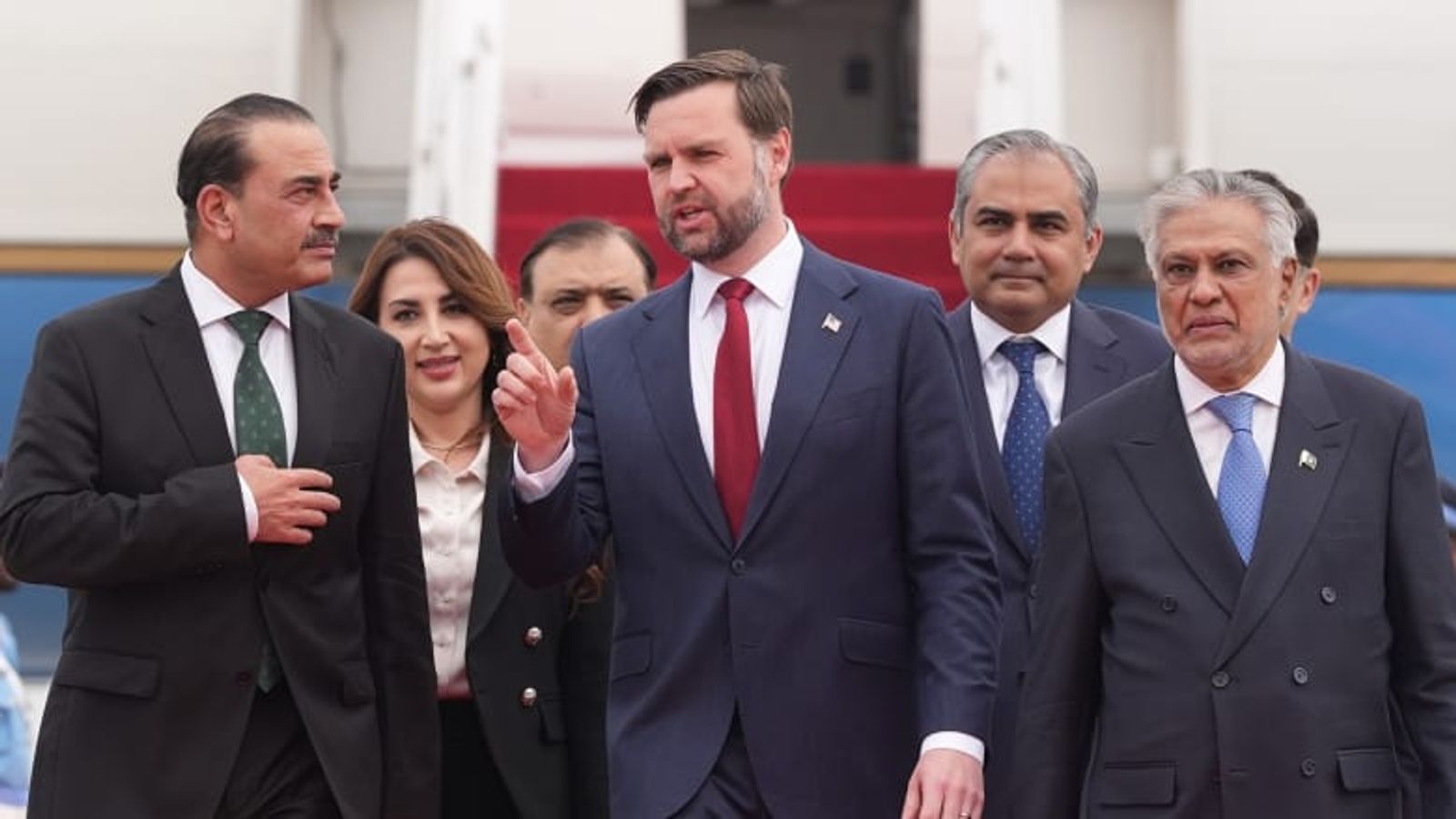
The United States and Iran agreed to a two-week ceasefire on April 8, with Pakistan serving as a diplomatic courier relaying messages between the two sides rather than a mediator shaping outcomes.
Pakistan delivered a 15-point US proposal to Iran that included demands to dismantle Iran's nuclear program, reopen the Strait of Hormuz and curb Tehran's support for armed groups. Iran rejected the proposal and sent a five-point counterproposal through Pakistan, calling for a halt to US-Israeli attacks, security guarantees, war reparations and no nuclear commitments.
Iran's foreign ministry acknowledged the indirect talks with the US "through Pakistani intermediaries."
Pakistan's Field Marshal Asim Munir and Prime Minister Shehbaz Sharif received credit for the role in facilitating the ceasefire and congratulatory calls from French President Emmanuel Macron, Turkish President Recep Tayyip Erdogan and UN Secretary-General Antonio Guterres.
Ahead of the agreement, Pakistani Foreign Minister Ishaq Dar hosted a quadrilateral meeting in Islamabad with the foreign ministers of Saudi Arabia, Turkey and Egypt. Dar then traveled to Beijing on March 31 to meet Chinese Foreign Minister Wang Yi, producing a joint China-Pakistan five-point initiative that was incorporated into the ceasefire framework.
Read the original reporting at Khaama Press →
Reliability assessment
Single source (Khaama Press) provides direct, on-record attribution with concrete, checkable details: named officials (Asim Munir, Shehbaz Sharif, Ishaq Dar, Wang Yi), specific dates (April 8 ceasefire, March 31 Dar's visit), quoted Iran FM statement, and detailed proposals.
The source language mixes facts with framing or advocacy wording. Khaama Press: "beyond the optics, a more complex picture emerges" - implies public perception is superficial and superficial; "functioned less as a mediator shaping outcomes and more as a well-positioned courier" - opinionated reframing that downgrades Pakistan's role; "reinforces the argument that Pakistan acted more as a courier than a mediator" - presents analytical thesis as an reinforced argument with mild advocacy.
Independent web corroboration
An independent web search turned up no separate corroborating reports. Treat the account as single-sourced until more outlets pick it up.
Across the newsrooms
Filed by
Khaama Press
Originating
Framed
Framed
Filed under
International — Pakistan, Iran, United States, China, Ceasefire
Reader supported
Keep Ehtebar running
Every published story uses paid tools to translate reporting, compare sources, extract claims, and produce a clearer read on Afghanistan. Reader support helps keep that work independent.
€5
helps cover daily verification runs
€15
supports a week of source comparison
€50
keeps independent analysis moving